 This is an updated and linked version of a column published in The Irish Examiner Saturday 24 March 2013.The deposit tax debacle in Cyprus is rich in historical resonances as well as showing that frankly as Leigh Phillips suggests in the EUobserver Europe is run by the three stooges. Skinning the Cypriots is not new. In 1571 in the height of the venetian ottoman war the defenders of Famagusta stood staunchly against the ottomans. On surrendering the leader was, despite promises of safe passage, skinned alive. Now we see that despite promises to “do whatever it takes” the ECB has supported skinning cypriot deposits. How doing whatever it takes squares with destroying trust in banking, bullying small nations and serially upping the ante is beyond me. Its even almost beyond Karl Whelan.
 Europe seems unable to work in a sensible manner, and is devolving into a crisis junkie. Again we see a meeting at 3am making decisions that in a fog of fatigue may have seemed sensible but on waking perhaps less so. The historical ironies pile up and people make mistakes. Cyprus is a small nation, far away. In 1939 a hegemonic Germany called the president of the independent rump of Czechoslovakia to a meeting. Hacha though the meeting was going to be bad but was subjected to a grilling and a haranguing that resulted in his collapse and the death of his country. What we saw in the meetings last week was, I would argue, little different. No, Im not suggesting that the Troika are Nazis. I am suggesting that big countries and their acolytes tend to have modes of operation that can be hidden for decades and then, to everyones surprise, come back to the fore. While not suggesting that anyone is going to invade the 60% of Cyprus not under occupation, the reports of the Eurogroup meeting are frankly nauseating. A hegemonic Germany, its allies and with the silent acquiescence of the rest of europe placed unreasonable demands on a small country. But we have seen this time and again and not just in the 1930s. If this is to be a union then it must be a union of equals. Even in the USA the bigger states cannot dictate to the smaller, save via the federal system.
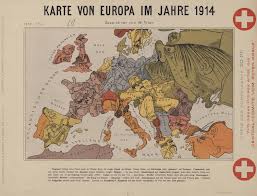 The historical ironies mount up. A century ago nobody really wanted a pan european war (At least not in 1914) and yet we found ourselves at war through a combination of poor diplomacy, overreaction to minor events, and a rigid adherence to plans laid in different times. Even as late as the start of the war Kaiser Wilhelm wanted to call it off to be told that the ReichBahn couldnt alter its plans and the trains were rolling. I dont know if Germany wants to kill the Cypriot model, although it has made it clear that they see it as dead. I do know that this approach, of frankly bullying and using the golden rule in its most naked form, is neither in the political or economic interest of the union. If you think that I am alone consider the views of Christopher Mahoney, who argues that the approach being taken will result in a latin american style EU. We may yet (although I do not think so) see Cyprus leaving the euro, and showing that that is possible, from a combination of these same factors. We have learned nothing in a century – neither how to live with a strong Germany nor how to contain a rampant Germany. There is an excellent article on the new German problem in The New Statesman.
 The genie is now out of the bottle with regard to depositors. Just this week and under the radar Spain introduced a deposit tax. Yes, it will be small (for now) and yes it will be paid by the banks (of course they wont pass it onto the customers…of course) but there it is. Commerzbank have mused on deposit tax for Italy. Deposits, including guaranteed deposits, are now in the firing line and we should all be wary and aware of that.El-Arian of PIMCO compared this to “lighting dynamite”, and he is right. Again go back to Mahoney of Moodys, linked above. He notes that we are now seeing the rise of “non convertible euros”, something unique. And why? for a few billon euro. Never has so much been at stake for so little.
 There are good arguments for bailing in creditors of failing banks, depositors at some stages included. What there are not good reasons for is crashing an entire economy or for destroying fundamental trust. Even with capital controls, Cyprus is in for a massive crash. . Simple economics (remember them?) remind us that MV=PY. M is money, V is how quickly it moves around, P is the price level and Y is income. This isn’t a model it is not a forecast its an accounting identity. With M in Cyprus going to fall like a stone then either money works harder, the price level falls (deflation, more destructive than inflation arguably) or the income level falls. Most probably all will happen but given prices tend to be downwardly sticky I suspect the majority of the adjustment will come on the level of national income. Estimates from market sources are for a 20% drop, and this is supposed to be the good outcome? Even with capital controls in place, and In passing we might wonder how exactly we can build a union built on free movement of goods, capital and people with capital controls, who now will trust cypriot banks? You dont have to be a wild eurosceptic to think that the introduction of capital controls is the death knell of the euro. There is an excellent blog on this issue in the Telegraph. Imagine capital control in say Warwickshire viz a viz the rest of the UK, Vermont versus the USA, Leitrim versus the rest of Ireland. Thats what we are now proposing.
 The proposal now (friday morning) on the table is to save guaranteed deposits and move unguaranteed (those over 100k) into a bad bank where they might end up getting only 40-50% return. There will also be a sovereign solidarity fund and some gas bonds. While few will grieve for oligarchs losing money lets sit back. companies, charities, people with money saved prudently and legally, anyone who is in the middle of a transactions chain with cash at the moment will also be cut. This will hit prudent cypriots and Cypriot SMEs hard. It might well hit some oligarchs but to be honest they will have their money stored in yachts in Monaco and Belgravian mansions not on deposit in Laki bank. The Russians that will be hit are those middle class savers who have done well from the last two decades and who, legally or no, saved that money in Cyprus to reduce the chance of expropriation. Sure, some mafiosi will be cut but are we now adopting collective punishment?
 Cyprus has been sacrificed on bad grounds. Its banks are overly large (although not as large as some other EU countries as % GDP) and the business model was flawed. But they were holed below the waterline with greek bond cuts and the collapse of the greek economy.They asked repeatedly over the last 9 months for assistance and when it came it was too late and flawed. The unwillingness of the europeans to consider flexibility in how to deal not with a bank but a banking system that was imploding is dogmatism at its worst. There are alternative plans out there that will deflate the cypriot banking sector without crashing the economy. But none of them seem to satisfy what is increasingly looking like a teutonic desire for exemplary punishment “die andere zu ermutigen” as it were….Every time a proposal emerges for sensible enhancement of the crisis management capacity of the eurozone so too will some obscure german to explain why the voters in lower thuringia won’t like it. The banking union, the existence of which might have saved this from being a quasi existential crisis, is stalled, on the rocks of German intransigence and unwillingness to realise that they are the leaders and that that involves leading. And sometimes to lead is to incur costs. Germany is not the eurozone and its time that this was made clear by the others. Either they pull their weight, and yes that may mean some costs somewhere down the line, or the eurozone staggers on at best with a lost generation at worst towards a breakup that will cost Germany anyhow. Forget Cyprus – Germany is the real problem state in Europe right now. Brendan Simms posits it well in his New Statesman article
The question we face now is this: how can the Federal Republic, which is prosperous and secure as never before, be persuaded to take the political initiative and make the necessary economic sacrifices to complete the work of European unity?
Over to you Germany….


Leave a Reply